

MMJC conducted a Need Assessment study for a women empowerment project in Mumbai Metropolitan region (MMR). For the study we used multiple strategies to understand the need and acceptability of the program among the direct and indirect stakeholders of the program. Our team interacted with 56 women auto drivers and 22 women enrolled in the autorickshaw driving training programme. In addition, the team conducted an online survey with 52 commuters (users) to understand their experiences, perceptions and opinion about women driving auto.
Our assessment found that there is a wide acceptance of the vocation among women, who viewed it as viable livelihood opportunity. The age profile among the women respondents was diverse, ranging from 18 years to above 40 years (43.6%). 36.4% belonged to the 30–40 years age group. The women represented diverse social categories, reflecting the inclusiveness of the project. It was observed that 83.6% of the women had educational qualifications up to the secondary level only. Among all respondents, 93.8% were married, indicating the increasing responsibilities they had undertaken after marriage, while 80% were the sole breadwinners of their families. Further, 87.5% of the women were earning below INR 10,000 per month through daily wage work or other jobs, while the remaining respondents earned between INR 10,000 and INR 20,000. Among the women surveyed, 49.1% stated that they learned about the project through the internet, whereas 40% came to know about it from women who had already completed the training and started earning as auto-rickshaw drivers.
The Women Auto-Rickshaw Driver Women Empowerment Programme is a women empowerment initiative that sought to create a sustainable livelihood opportunity for women from economically weaker and marginalized communities. The programme supports women through awareness sessions, a structured 21-day driving training programme, assistance in obtaining a driving licence, and guidance in accessing vehicle finance to become independent auto-rickshaw drivers. It complements the Maharashtra Pink E-Rickshaw Scheme, under which eligible women can receive financial assistance to purchase an electric rickshaw through a model comprising 20% government subsidy, 70% bank loan, and 10% beneficiary contribution, provided they possess a valid driving licence. Together, these initiatives help women achieve financial independence, improve their confidence and social recognition, and build a sustainable source of livelihood while balancing their family responsibilities.
The assessment sought to provide project implementors a clear understanding of the aspirations and challenges faced by women engaged in daily wage work or other low-income jobs. It was observed that 78.2% of the women respondents had enrolled in the training programme with the primary objective of earning a stable income, while the remaining respondents stated that they wished to achieve the freedom of working as entrepreneurs. When asked about their concerns regarding working as auto-rickshaw drivers, women commonly highlighted fears related to heavy traffic and balancing childcare and family responsibilities. Existing women auto drivers also shared additional challenges, with 76.2% reporting the absence of a stable income source during the initial stages of their journey. The same respondents also emphasized the limited livelihood opportunities available for women in their communities.
“My name is Anju. Earlier, I used to work in a job where I earned less than INR 20,000 per month, but there was neither peace nor freedom. I felt as though I was working like a slave. I believe that after completing this training, I will have the freedom to work on my own terms.”
Meena expressed, “I was working very sincerely at my job, but I had no time for my family or to manage my household responsibilities. I chose this training over my job because it can give me both an income and the flexibility to take care of my family.”
The assessment highlighted that a core challenge faced by women auto drivers were related to hygiene and sanitation, particularly during menstrual cycle while working on the roads and requires essential administrative intervention to improve public sanitation facilities in the city and surrounding regions.
Jyoti shared, “Whenever we are out driving, we have to use public toilets, even during our menstrual period. Most public washrooms are unhygienic, and I fear getting infections. We now try our best to follow proper hygiene practices while continuing our work.”
The unconventionality of the work was the primary reason for its acceptability among women. The women reported that flexibility of work hours and the power to manage her schedule allows them to manage both their income and family responsibilities simultaneously, without the pressure associated with conventional jobs. 100% of the women reported a significant improvement in their self-confidence after completing the training. They transformed from fearing the roads to driving with confidence.
Seema shared, “Initially, I found it very difficult to understand traffic and was afraid of driving because I had never even ridden a scooter or a bicycle when I was younger. But after two to three months of driving, I can now drive confidently without fear and have gained the trust of passengers by ensuring they reach home safely.”
The project addresses 3 major factors of women disempowerment – Gender Stereotypes, Limited freedom of movement and financial dependence. The social transformation potential of the program was found very high:
- Breaking Gender Stereotypes: 94.6% of the women believed that driving an autorickshaw is no longer a profession limited to men and that women can perform the role equally well. This was repeated by both current and prospective auto drivers.
- Improved Mobility: 96.3% of the participants expressed complete confidence in travelling independently across the city, reflecting enhanced mobility and personal freedom.
- Financial Independence: 90.9% of the women stated that they now feel confident managing their bank accounts, handling loans, and tracking their monthly EMI repayments independently.
How is society talking about women auto drivers?
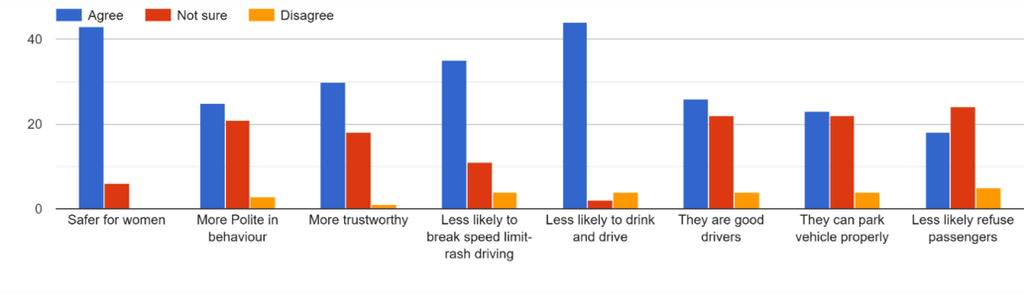
82.7% Women commuters believed women should be encouraged to take up trainings and become auto drivers, as it would make them feel safer, and that commute conditions would improve as women were less likely to drink and drive.
Users’ positive and encouraging opinion showcase buy-in of a critical stakeholder and a high sustainability score of the program.
Kindly Note – Beneficiaries have been anonymised by using different names in the above article.
The article is written by
Pratik Ambekar – Senior business consultant